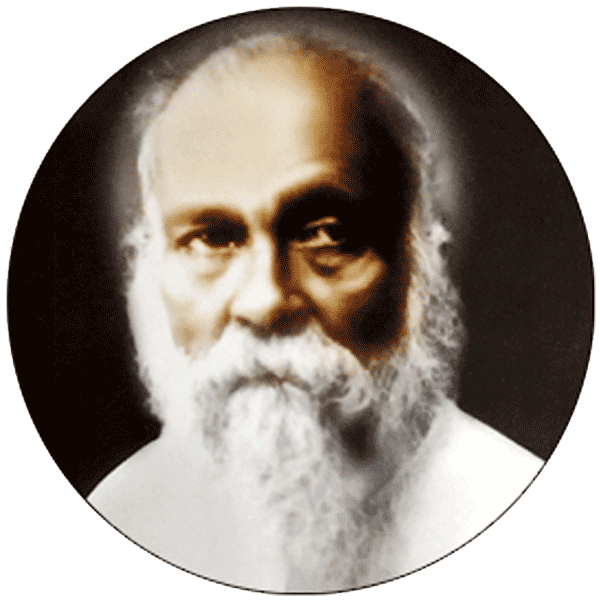
(Written By, M.V.N. Subba Rau; Collected from the Introduction of the Book, “Precepts of Haranath (1937)” Compiled by, M.V.N. Subba Rau)
(1)
“Still He descends from heaven.” (Alfred Noyes)
अवजानन्ति मां मूढा मानुषीं तनुमाश्रितम्।
परं भावमजानन्तो मम भूतमहेश्वरम् ॥9.11॥ (Gita)
avajānanti māṅ mūḍhā mānuṣīṅ tanumāśritam.
paraṅ bhāvamajānantō mama bhūtamahēśvaram৷৷9.11৷৷ (Gita)
“Fools disregard Me clad in human form, not knowing My higher being as the Great Lord of beings.” (Gita: IX-11)
Though the name of Haranath has been rapidly spreading in the country in recent years still there are a great many people who do not know him. The compiler of this book may therefore expect to be asked the very reasonable question, “Who is Haranath?” I shall try to state here briefly what little I know of Haranath.
But at the very outset I must confess plainly that I am not presumptuous enough to think that I can give an adequate answer to the question, “Who is Haranath?” Haranath himself said, “My life is a great riddle,” and again, “My inner and outer selves are different. Hence your difficulty in understanding me.” He will indeed be a bold man who can say that he knows Haranath well and fully. The personality of Haranath was complex and beyond human understanding. To all appearances, he was an ordinary man and lived the life of an ordinary man. It is true he was known by many as a great Bhakta who spent his time singing the praise of Sri Krishna. A few of his most intimate friends thought that he was not an ordinary man, not an ordinary Bhakta, but a great yogi who had miraculous powers. Fewer still had a faint suspicion that he was a divine messenger with superhuman powers. Just a handful of lucky souls upon whom the Lord’s grace descended felt that he was no other than God Himself. But Haranath’s naïve simplicity, his gay frolicsomeness, his entirely human craving for fellowship and love, the prompt manner in which he attributed every miracle that they witnessed to the grace of Sri Krishna enveloped them all in Maya and made them oblivious of his Divinity. He was an enigma to them all. Sri Krishna’s words about himself, “Na me viduh suraganaah prabhavam na maharshayaha” (GITA : X–2), are entirely applicable to Haranath. Who could really recognize the transcendent Lord when the Supreme Actor chose to play the part of man?
He was born, educated, and married like other men. He had children, and he earned his living by the sweat of his brow like other men. He went through the daily routine of life, enjoying its pleasures and miseries, its joys and griefs, much like other men. This was his outer life.
His real life was entirely different. But how can I describe the mysterious play of the Master Player who played in almost consummate manner the part of man during the space of some sixty-two years? He was a householder, but was called a Sadhu by friends and all. He lived the life of a Bhogi, but was known as a Yogi. He was called a Bhakta, but was the supreme Goal of all Bhaktas. He appeared to be mortal man subject to all the limitations and ills that flesh is heir to, but was in reality the Supreme Purusha Infinite and Eternal. It is only a Vyasa or a Valmiki that can describe the life of Haranath in anything like an adequate manner. I shall content myself by jotting down here a few facts concerning the external life that Haranath led during his sojourn in the human body on the earth, and perhaps by indicating in a few words what I guess to be his real nature.
(2)
In the village of Sonamukhi in the district of Bankura in Bengal, there lived in the nineteenth century a pious Brahmin couple – Jayaram Bandyopadhyaya and his wife, Bhagavati Sundari Devi. Jayaram was an ardent worshipper of Siva, and his wife was a great devotee of Syama Sundar. Haranath, their second son, was born on the 1st of July 1865. Jayaram passed away when Haranath was about three years old. Haranath passed his Entrance Examination from the High School at Kuchiakol, and then was sent to Calcutta for higher studies. He passed his F.A.Examination from the Burdwan College and studied for the B.A.degree Examination, but did not take the degree.
As a matter of fact, Haranath paid but little attention to his studies. He spent most of his time either in Sankirtan or in silent meditation. More than once he had to be awakened from his deep trance in the classroom by the peon who went there at the end of the day’s work for closing the doors, When once his brother remonstrated with him on the continued negligence of his studies and worldly affairs he told his mother that he had no very high ambitions in life, and that his desire was to live like a common man and be able to move on terms of equality with ordinary folk.
Through the good offices of his classmate and devotee, Ramachandra Mukherjee, who happened to be the Headmaster of H.E.School at Ayodhya, a small town near Sonamukhi, he obtained the post of a school-master in that school. But he stayed there only for a few months. Later, in 1892, he was appointed Assistant Superintendent of Dharmartha Office at Srinagar in Kashmir. Here he worked until his retirement in 1914.
Haranath married in his 13th year, on the 29th of January 1879, Kusuma Kumari Devi. Two sons and three daughters were born to them. Haranath was greatly attached to his mother, and when he had to go to Kashmir his one great regret was that he could not be near his mother in her old age to do service to her, but he consoled himself by keeping his wife at Sonamukhi to look after his mother. It was only after the demise of his mother on the 4th March 1903 that Kusuma Kumari Devi joined him at Srinagar.
Haranath’s fame as a Bhakta and Yogi of extraordinary powers spread rapidly in certain circles during the latter half of his life. Even when he was in service in Kashmir, His devotees used to celebrate his Janmostav every year in different parts of Bengal. In 1913 at the invitation of a devotee, he visited Simla. When people came to visit him, he called every one by name and his conversation with them indicated how well he was acquainted with the domestic details of every one of them, though he had never seen them before. They were all so impressed that at a public meeting a handsome amount was collected for founding an Asram in Haranath’s name. The Asram was later built at Brindavan. It was in the same year that he visited Dewas at the request of the Maharajah Saheb and was given a princely reception and divine honours.
After retirement from service, Haranath spent his time in pilgrimages and in tours to different parts of the country. He literally spent himself in the service of his devotees and finally left his worn out physical body on the 25th of May 1927 at Sonamukhi. Kusuma Kumari Devi is happily with us still.
(3)
Such, in simple outline, was the later life of Haranath. Though he was looked upon with great reverence by his personal friends and devotees it cannot be said that he was a popular figure in Bengal. Outside Bengal few heard his name. This must strike as extraordinary when we remember how the whole country was in the latter half of the nineteenth century seething with political, social, and religious unrest and upheaval. It was in Bengal that the East and the West first came into close contact, and as a result of that there was a terrific explosion, the rumbling of which reverberated through the whole land. Furious attempts were made to destroy and reconstruct the fabric of Hindu society, culture and religion. Following in the wake of the great Rajah Ram Mohan Roy, Maharshi Devendranath Tagore, Keshub Chandra Sen, and Pundit Sivanath Sastry of the Brahmo samaj played a conspicuous part in the work of destruction and construction. Their names resounded throughout the length and breadth of India. A more effective and more permanent kind of reform and reconstruction was about the same time going on under the silent influence of Sri Ramakrishna Paramahamsa and the eloquent campaign of his great disciple Swami Vivekananda. Being born in 1865 Haranath was a contemporary of all these great men. He was about sixteen years old when the Sadharan Brahmo Samaj and the New dispensation were established, twenty one at the time of Ramakrishna Paramahamsa’s niryan, twenty eight at the time of Swami Vivekananda’s Chicago Address, and was thirty four years of age when the Ramakrishna Mutt was founded at Belur. His work of rehabilitating Hindu religion and culture was greater and more holding than the work of any of these. Yet his name was little known. He made very little noise. If the least little miracle he performed were known to the people at large his reputation would have been so astoundingly great that the fame of every other religious and social reformer would have faded into insignificance like the light of a candle in broad daylight. But Haranath chose to work silently. Inscrutable indeed are the ways of God!
Though Haranath wore the garb of a Bhakta he was really Bhagavan Himself in human form. What a divine irony that just at the time when English-educated Indians were jeering, at their fathers for their superstitious belief in Rama, Krishna and other Avatars, the Supreme God chose to incarnate Himself as an English-educated Indian idolater and taught, by precept and practice, devotion to God and His Incarnations!
(4)
Haranath was the Incarnation of God. He was an Incarnation of Prema. It is at once easy and difficult to understand the problem of Divine Incarnation. If you want to understand with the aid of the intellect alone you will most miserably fail. But if you seek the aid of the understanding heart you will comprehend the mystery. The question as to how and why the attributeless and impersonal Absolute has become the self-conscious Personal Being may be left to the fruitless ruminations of the metaphysician whose business is, as some one has said, “the finding of bad reasons for what we believe on instinct.” Religion is concerned only with the Personal God — the Infinite God who is All-Will, All-Wisdom, and All-Love. The power, the wisdom, and the love of God are indeed manifested every day to us in a hundred different ways. But on account of familiarity, and the all-enveloping Maya of Nature we frequently fail to recognize Him, and even if we sometimes feel His presence in Nature, we are unable, owing to the limitations of our flesh-bound spirit, to come into close contact with Him, speak to Him, and love Him as we do love our human relations. Our spirit can indeed cognize the supreme Spirit of God, but in as much as it is enmeshed in flesh and blood, the human in us craves for the human in God. For a close companionship, an intimate intercourse, and a loving embrace of the human and the divine, both the ascent of man and the descent of God are necessary. The starry heavens above proclaim the power and the glory of God; the wisdom of God is whispering unto us by the still small voice of conscience within. We may recognise God above us, and God in us. But unless we have God with us we cannot rest satisfied. To satisfy this craving of ours God comes to us in the form of Man.
Not only has man need for the companionship of God; God Himself, in a like manner, has need for man. God, who is All-Love, longs for the loving intercourse of man. In fact, this is the raison d’etre for the One to become the Many. The whole of this infinite variety of creation has sprung up from the infinite longing of the God of Infinite Love.
“Anandadhyeva khal vimaani bhootaani jayante.”
Haranath was called Pagal (mad) Haranath. He called himself Pagal. It is a most appropriate appellation. It is either the Thinking God nor the the Willing God that becomes man, but the Feeling God — the Loving God. Haranath was mad with love, love for you and me, and for the whole of humanity. In many of his letters one comes across expressions like, “I am a helpless creature,” “I have none but you,” “I am a waif,” “you must save me.” God’s need for man is most powerfully and beautifully illustrated by Haranath in this manner. He comes to live with us as man among men, not once or twice or ten times, but over and over again. The words of Sri Krishna in the Gita are literally true: “Bahooni me vyathithaani janmaani.”
When Mr.Narayana Chandra Ghose, B.A.,B.L, of Calcutta visited Haranath for the first time in 1908 Haranath addressed him by his pet name (known only to the members of his family) and altogether produced the impression that, though Mr. Ghose could not remember just then when and where he had met Haranath, his appearance was very familiar. So he asked Haranath in what college he had studied. “Understanding the object of my question,” writes Mr.Ghose, “He replied, ‘Dada, it is no wonder that my face seems so familiar to you. We have been travelling together, life after life. You perhaps do not remember me, but I remember you well’.”
So the God of Love becomes man frequently in order to enjoy the loving companionship of man. There is also an ethical purpose in the descent of God. “His abundance radiates into our poverty” so that our poverty might be transmuted into wealth. As Pringle Pattison says the true God is “a God who sees in the perpetual giving of Himself, who shares the life of His finite creatures, sharing in and with them the whole burden of their finitude, their sinful wanderings and sorrows, and the suffering without which they cannot be made perfect.” So God incarnated Himself as Haranath, even as He had descended before as Rama, Krishna, and Jesus and so on, and stooped to man in order that man might be raised. He subjected himself to the finitude of Prakriti, to the sorrows and sufferings that are incidental to human life. Gita says,
“Purusha seated in Prakriti enjoys the attributes born of Prakriti.”
Haranath willingly took upon Himself the sorrows and sufferings of humanity; He called upon all men, even as He had called upon them nineteen hundred years ago, to lay the burden of their sins on Him and enter the Kingdom of Love joyfully.
(5)
One of the most remarkable things about Haranath is his performance, both when He was in the physical body and now two-years after His passing away, of what are called miracles. But most of His miracles are the result of His love, the taking upon Himself of the sufferings of His devotees. I will mention here two or three by way of example:
1. When He was a student, His classmate and devotee, Ramachandra Mukherjee, once happened to suffer from consumption. Haranath advised him to repeat every day the name of Sri Krishna. Following His advice Mukherjee found himself free from that terrible disease in a few days; but he saw to his dismay that Harnath had an attack of consumption. When asked about it He replied, “I enjoy suffering for the sake of those I love.”
2. Dr.Y.Venkatramaiah, D.Sc (Paris) etc, of Vizianagaram had been suffering from heart disease for several years, when in July 1936 he attended a Haranath Sankirtan in the house of Mr.M.Sriramamurthy, M.A;LL.B; and saw in the picture of Haranath before him a black spot near the heart and intense pain in the countenance of Haranath. He has never since suffered from heart pain. (Sri Kusum Haranath magazine, Vol.1, Book.2)
3. Mr.Jotish Chandra Biswas, B.A;B.L; Advocate, Calcutta, relates how he died in 1922 and was brought back to life by the grace of Haranath.
4. Mr.Aduri Satyanarayana of Poolla is another example of the revival of the dead by Haranath.
Innumerable are the instances of the saving grace of Haranath. The reports of His miracles narrated by eye witnesses read like stories from the Puranas or the New Testament Gospels. It is difficult for any unbiased and fair-minded critic to escape the conclusion that Haranath was the same God that incarnated Himself as Rama, Krishna, and Jesus.
The distinguishing feature about this Incarnation is His method of converting sinners. He came this time not for the destruction of the wicked but for their conversion. Most miraculously did the hearts of sin-hardened villains who approached Him melted. But they who came to scoff remained to worship and love. Even today this miracle is happening. To attract sinners to Him, even now though He is not in His physical body, He is performing miracles. You hear of the miracles, you witness them yourself, you are convinced of the Divinity of Haranath much against your own will, you worship Him in secret for sometime, and then you will not rest till you proclaim His glory and Love to the world at large. Such is the miracle that is happening every day now. He is attracting men of all religions to His feet. As He Himself said, “Krishna played with the Hindus; Christ played with some; Buddha played with some more. Now Haranath has begun to play with people of all religions, creeds, and sects in the world.” In Him the East and the West are going to meet in harmony and amity. “The whole universe,” said Haranath, “is encompassed by my play.”
(6)
It was never the intention of Haranath to found a new creed, a new cult, or a new religion. Though He showed on various occasions that He could discuss philosophical questions in a most learned and skilful manner, He would have nothing to do with them. He appeals to the heart and bids it recognise its Lord and worship Him with devotion and love. Even as the name of the beloved ever rings in the ears of the lover, let the Name of the Supreme Beloved ever ring in your ears and be reverberated in your heart. Always think of God, repeat His Name constantly, orally, mentally, and by the heart; surrender yourself completely to Him as the Be-All and End-All of Existence, and you will be saved. Such is the simple message of Bhagavan Haranath. He repeats and reiterates the advice He gave as Krishna to Arjuna:
मच्चित्तः सर्वदुर्गाणि मत्प्रसादात्तरिष्यसि।
अथ चेत्वमहाङ्कारान्न श्रोष्यसि विनङ्क्ष्यसि৷৷18.58৷৷ (Gita)
maccittaḥ sarvadurgāṇi matprasādāttariṣyasi.
atha cēttvamahaṅkārānna śrōṣyasi vinaṅkṣyasi৷৷18.58৷৷ (Gita)
“Fixing thy heart in Me, thou shalt by My Grace, cross over all difficulties; but if from egotism thou wilt not hear, thou shall perish.” (Gita; XVIII-58)
Jai Sri Kusuma Haranath.
M.V.N.S
 Welcome to KusumHaranath World